
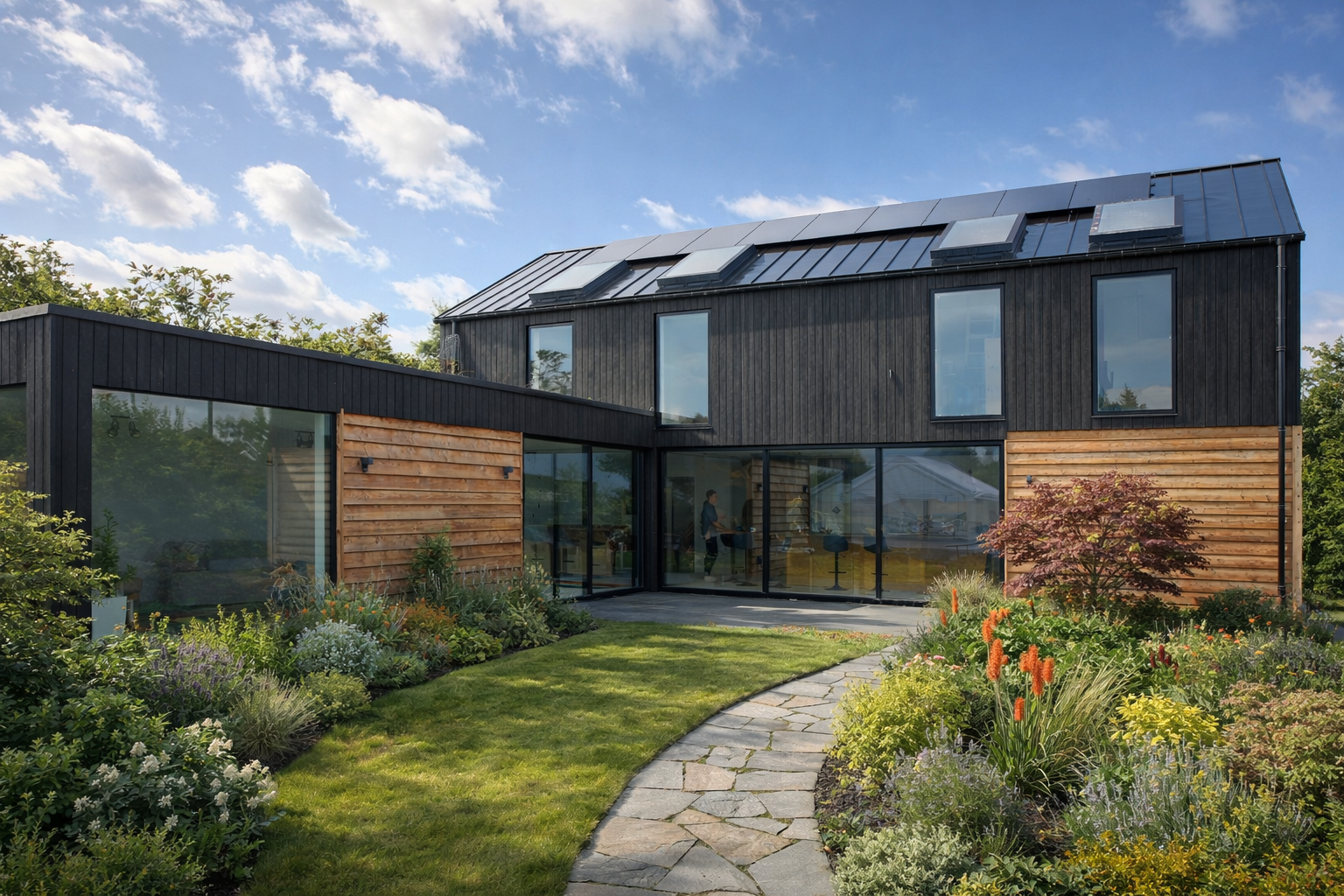
A Self‑Builder’s Guide to the Galaxy
Don’t panic. If you’ve picked up The Hitchhiker’s Guide to the Galaxy, you’ll know that those two words are excellent advice when faced with something vast, complex and slightly overwhelming. Self‑building your own home can feel exactly the same.
This blog is our self‑builder’s guide to the galaxy: a practical, down‑to‑earth overview of the self‑build journey in the UK, what really matters at each stage, and how the right professional support can turn confusion into confidence (and drawings into a finished home).
Whether you’re at the “daydreaming on Rightmove” stage or already own a plot, this guide will help you navigate the universe of self‑build.
Step 1: Know Your Universe (and Your Limits)

Every successful self‑build starts with clarity. Before sketches, before planning, before builders’ quotes, ask yourself:
- What’s my realistic budget (including contingency)?
- What do I need vs what do I want?
- How involved do I want to be day‑to‑day?
- Am I aiming for long‑term family living, resale value, or both?
In the UK, self‑build budgets are often stretched by underestimating professional fees, groundworks, and compliance costs. A good architect will help you test your ideas against reality early on — saving money and stress later.
Step 2: Planning Permission – The First Wormhole
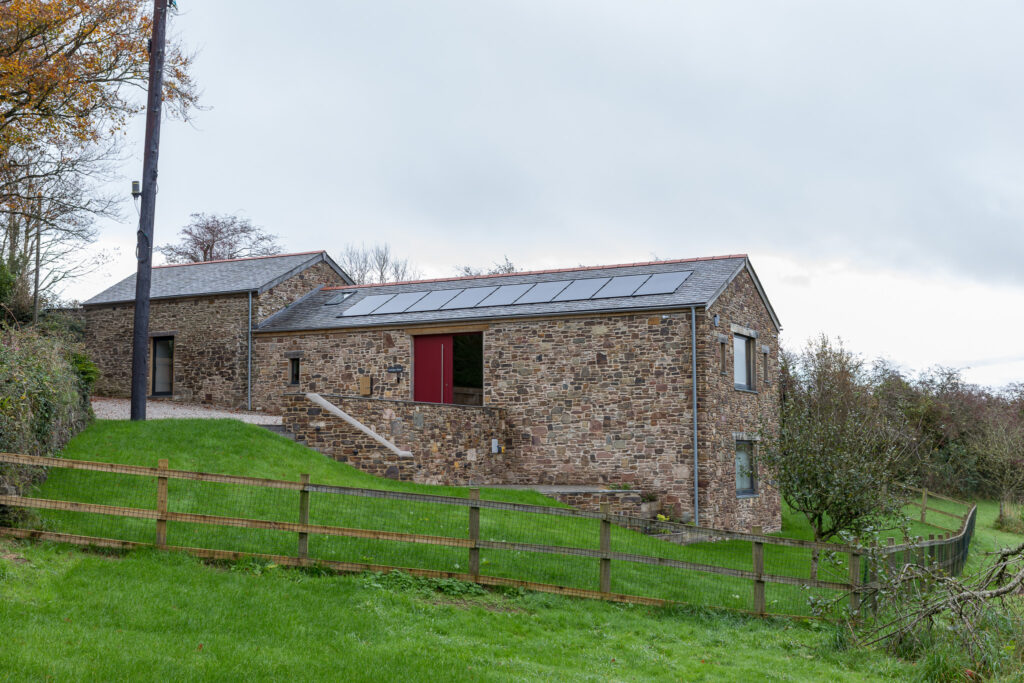
Planning is often where self‑builders feel lost in space. Policies, local plans, neighbours, design constraints — it’s a lot.
Key things to understand:
- Planning is policy‑led, not opinion‑led
- Each local authority interprets guidance differently
- A strong design and clear justification massively improve success rates
An experienced architect doesn’t just draw a house — they design a proposal that responds to planning policy, site context and risk. This is especially important for:
- Rural or edge‑of‑settlement sites
- Replacement dwellings
- Backland or infill plots
- Sensitive landscapes
Get this stage right and the rest of the journey becomes far smoother.
Step 3: Design That Actually Works for You
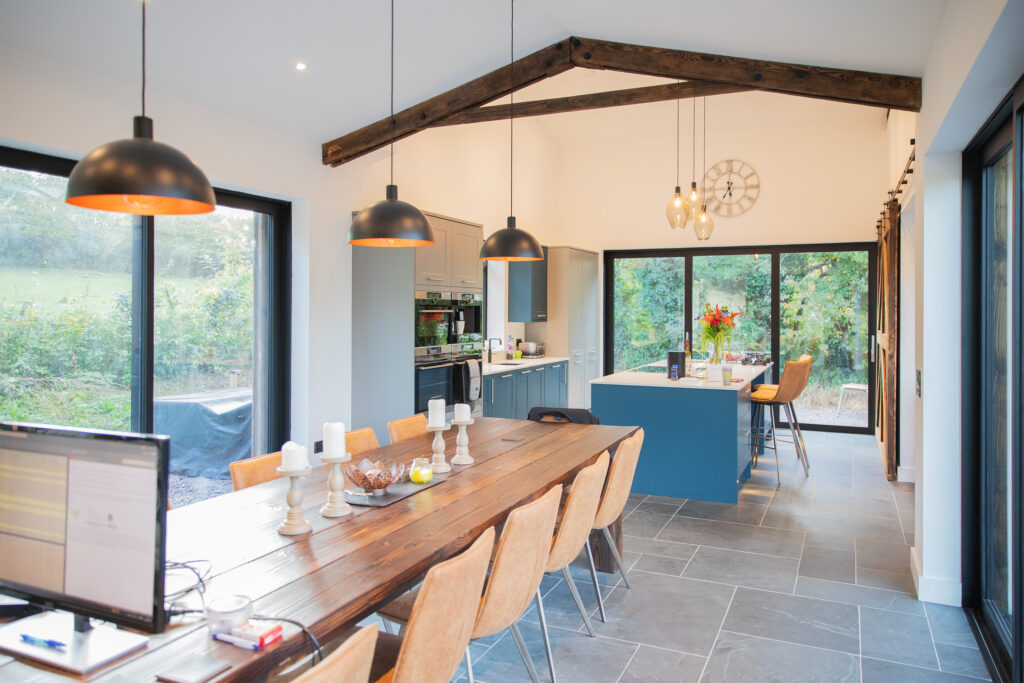
Great self‑build design isn’t about flashy Instagram images. It’s about:
- How the house works on a wet Tuesday in February
- Natural light and energy efficiency
- Storage (always more than you think)
- Long‑term flexibility
We always encourage self‑builders to think beyond floor area and focus on how spaces feel and function. Orientation, window placement, material choices and buildability all matter — and all affect cost.
A tailored design will:
- Reduce construction risk
- Improve energy performance
- Increase long‑term value
This is where working with an architect who understands self‑build construction in the UK really matters.
Step 4: Technical Design & Building Regulations
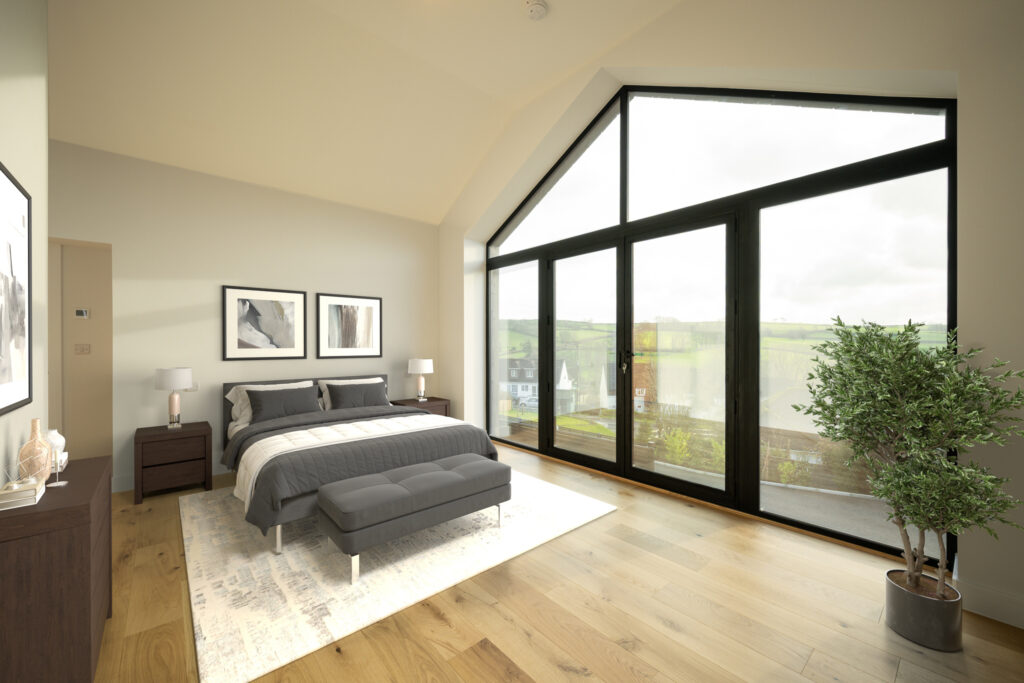
Once planning is secured, the technical side begins. This is where your project moves from concept to something a builder can price and construct.
This stage typically includes:
- Detailed technical drawings
- Building Regulations compliance
- Construction details and specifications
- Coordination with structural engineers and consultants
For self‑builders, this stage is critical. Clear information means:
- More accurate tenders
- Fewer surprises on site
- Better cost control
Skipping or rushing technical design is one of the biggest mistakes we see — and one of the most expensive.
Step 5: Choosing the Right Builder
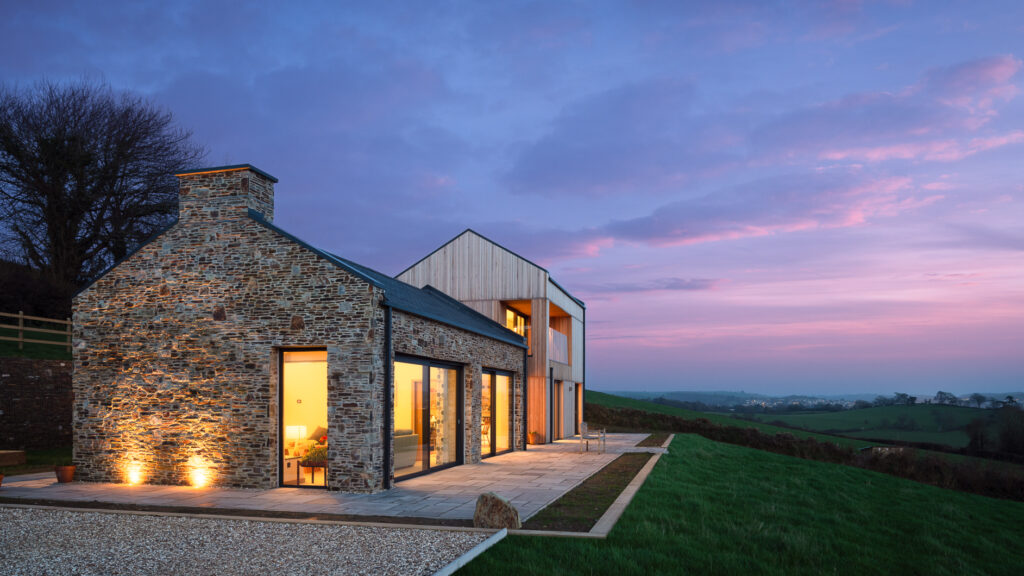
In a galaxy full of builders, not all are right for self‑build.
Look for:
- Proven self‑build experience
- Clear, transparent pricing
- Good communication
- Willingness to work with drawings and specifications
We often help clients during tendering, answering queries and comparing returns on a like‑for‑like basis. This alone can save thousands — and a lot of sleepless nights.
Step 6: On Site – Don’t Panic (Again)
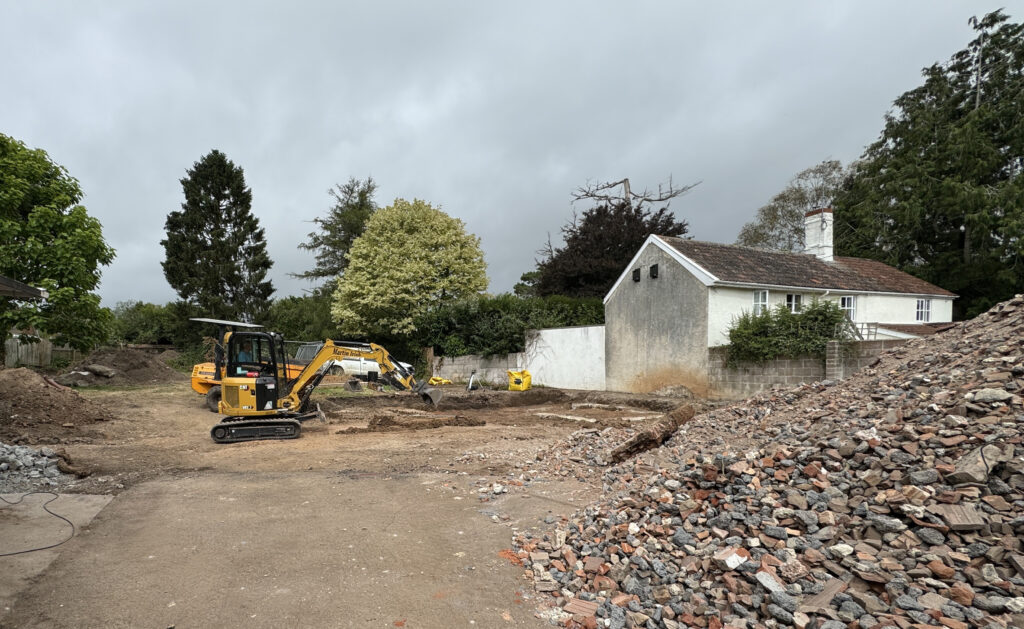
Even the best‑planned self‑build will throw up questions on site. The key is having the right support when it happens.
Architectural involvement during construction can:
- Resolve issues quickly
- Protect design intent
- Maintain quality
- Reduce costly mistakes
Think of it as having a guide who knows the terrain — and can translate between you and the builder when things get technical.
Why Work With an Architect for Your Self‑Build?
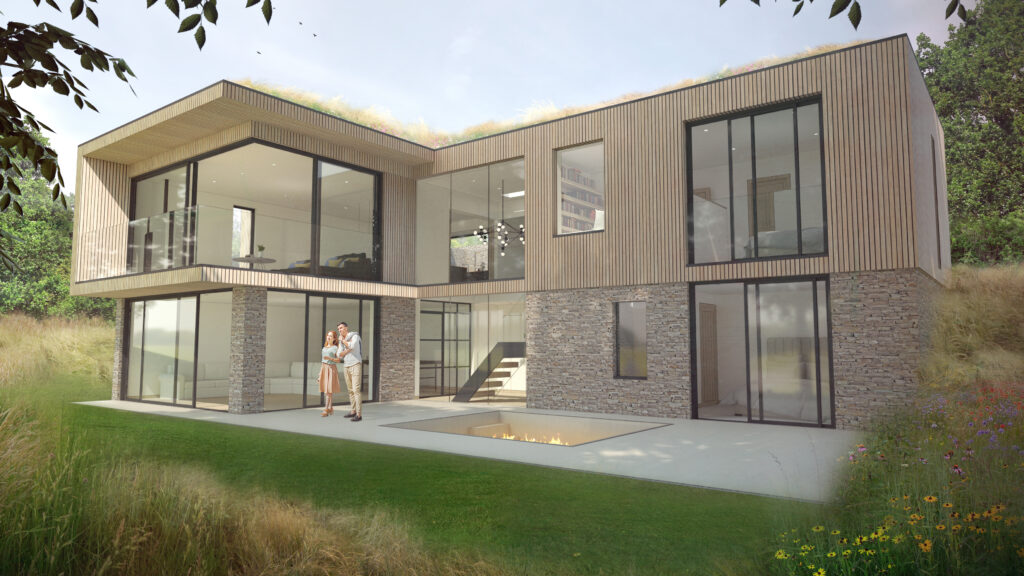
A self‑build is likely the biggest investment you’ll ever make. An architect’s role is to protect that investment.
We help self‑builders by:
- Turning ideas into viable designs
- Navigating planning policy
- Controlling cost through smart design
- Producing clear, buildable information
- Supporting clients from first sketch to completion
Most importantly, we design homes that are personal, practical and built to last.
Ready to Start Your Own Journey Through the Galaxy?
If you’re thinking about building your own home — or you already have a plot — we’d love to help you take the next step.
Whether you need early feasibility advice, planning support, or a full architectural service for your self‑build, getting the right guidance early can make all the difference.
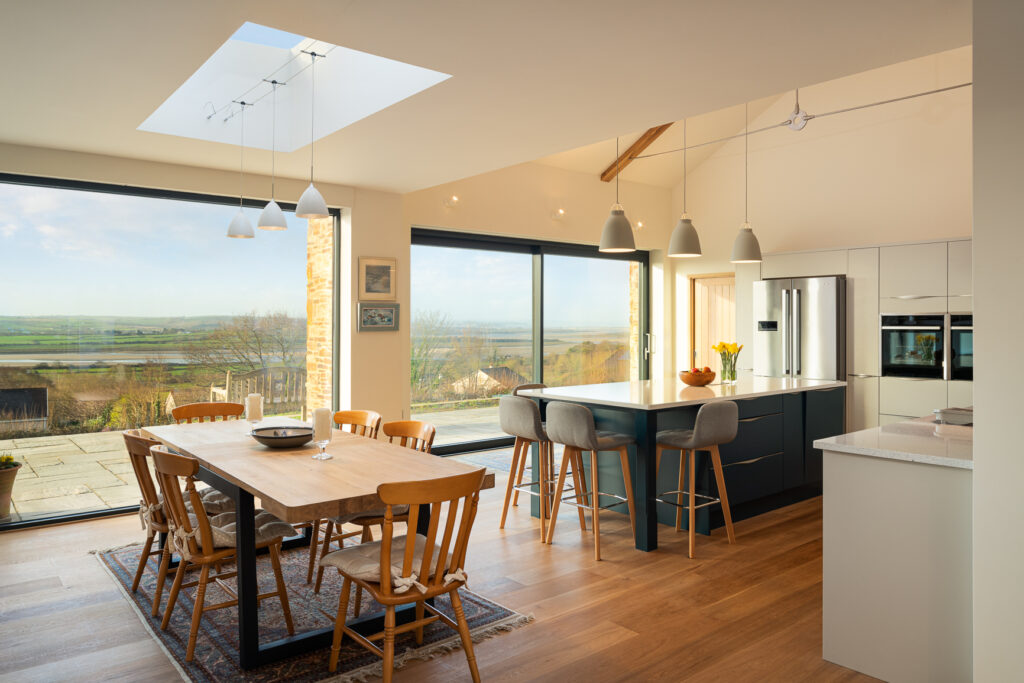
Don’t panic. Get in touch.
Contact us today to discuss your self‑build project, book an initial consultation, and start your journey with a clear plan and expert support.
Your self‑builder’s guide doesn’t have to be a book. Sometimes, it’s just the right conversation.